Industrial Building Maintenance & Refurbishment in Mussafah
Warehouse repairs, factory refurbishment, industrial painting, epoxy flooring and planned maintenance for units in Mussafah M9, M10, ICAD and across Abu Dhabi, delivered by one accountable contractor.
Industrial Contractor in Mussafah, Abu Dhabi
Industrial Building Maintenance in Mussafah: What FAIRBUILD Delivers
Industrial building maintenance in Mussafah is a different job from looking after an office or a villa. The buildings here carry forklifts, racking, hot processes, washdown water, chemicals and vehicles, and they do it in a climate where roofs and walls regularly sit above 60 degrees Celsius in summer and where humid, salt-laden air attacks steel and concrete all year round. A hairline floor crack or a leaking roof sheet that would be a nuisance in a showroom can stop a loading bay or contaminate stock in a warehouse.
FAIRBUILD is a licensed Abu Dhabi general contractor with its own office on Mussafah M9. We act as your industrial maintenance contractor in Mussafah for the things that make a unit safe, clean and presentable: floor repair and warehouse epoxy flooring, industrial painting, wall and ceiling repairs, partitions and mezzanine offices, factory refurbishment, workshop renovation and lease-handover works. Our own supervisors and tradespeople carry out the work, so there is one team to call and one person responsible for the outcome.
This guide explains how we approach industrial building repair in Abu Dhabi, what each system is for, what drives cost and programme, what permits and safety controls apply, and how to compare contractors. It is written for facility managers, plant owners, logistics operators, workshop owners and landlords in Mussafah M9, M10 and ICAD, but the principles apply to any industrial area in the emirate.
Why Industrial Buildings in Mussafah Need a Maintenance Plan, Not Just Repairs
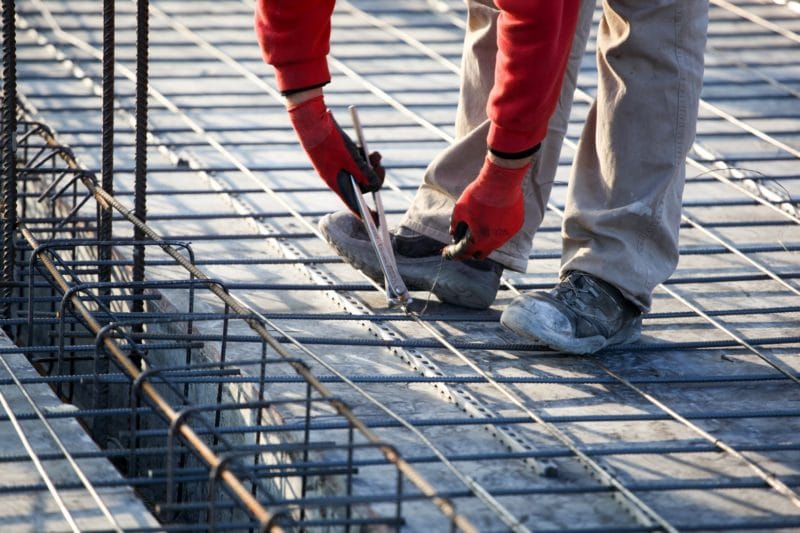
Most industrial owners only call a contractor after something fails: a roof leaks onto pallets, a floor joint breaks up under a reach truck, or an inspector or landlord flags a safety finding. Repairing at that point is always more expensive than acting earlier, because failure rarely stays local. Water that enters through one failed sealant line wets insulation, rusts purlins and stains ceilings across a whole bay. A crumbling joint edge damages tyres and wheels, then the slab beside it.
Mussafah is demanding for three reasons. First, heat: steel sheeting, roller shutters and coatings expand and contract through large daily temperature swings, which opens joints and fatigues fixings. Second, moisture and salt: the area sits close to the coast and the Mussafah channel, and night-time humidity is high for much of the year, so unprotected steel corrodes quickly and chlorides work into concrete. Third, operations: heavy wheel loads, chemical spills, washdown and abrasion wear floors and walls far faster than the design life of a standard finish.
A maintenance plan simply turns those known risks into scheduled inspections and small, cheap fixes: re-sealing before the leak, re-coating before the steel rusts, repairing a joint before the slab edge spalls. We build that plan with you after a walk-through, and it can be as light as a twice-yearly inspection or as full as a monthly programme with reporting.
Mussafah M9, M10 and ICAD: The Premises We Maintain
Mussafah is Abu Dhabi's main industrial district, laid out in numbered sectors, with the Industrial City of Abu Dhabi (ICAD) alongside it. It is also written as Musaffah on many signs and documents. Our office is in the Industrial Area on M9, and we regularly work in M10, ICAD and neighbouring sectors. The building types are broadly similar, but the maintenance priorities differ with how each is used.
Before we price any work we confirm the building type, the lease and who is responsible for what. Many units are leased, and tenancy contracts usually split responsibilities between landlord and tenant: structure and roof are often the landlord's, while floors, internal finishes, partitions and fit-out are often the tenant's. We help you read the scope against your contract so that nothing is repaired twice or missed.
| Premises type | Common examples | Most frequent maintenance needs |
|---|---|---|
| Warehouses and logistics units | Racked storage, cold-chain staging, distribution, 3PL | Floor joint repair, epoxy or polyurethane floor coating, roof and cladding leaks, repainting, safety line marking |
| Factories and production units | Food and beverage, packaging, plastics, building materials | Hygienic wall and floor coatings, drain and trench repair, partition and ceiling upgrades, phased refurbishment |
| Workshops and garages | Vehicle repair, fabrication, machining, spare-parts units | Oil-resistant floors, washable wall finishes, mezzanine offices, ventilation-friendly ceiling and lighting upgrades |
| Yards, labs and light-industrial units | Showroom plus storage, testing labs, service centres | Mixed finishes, office-grade partitions and ceilings, floor levelling, exterior repainting |
| Staff accommodation and offices on site | Site offices, canteens, welfare blocks | Painting, gypsum ceilings, partitions, flooring, general maintenance |
Warehouse Maintenance in Mussafah: What Actually Fails and Why
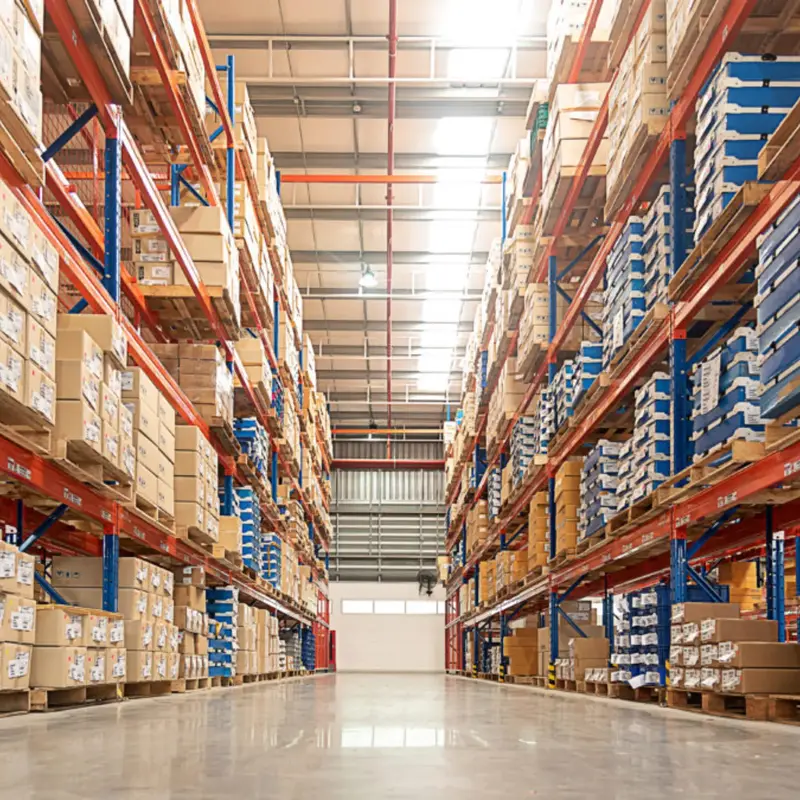
Effective warehouse maintenance in Mussafah starts with knowing where warehouses fail. In our experience the repeat offenders are fairly consistent, and most are visible during a simple walk-through if you know what to look for.
Roofs, cladding and openings
Leaks usually start at fasteners, side laps, ridge flashings, gutters and skylights, not in the middle of a sheet. Thermal movement loosens screws and degrades sealant, and blocked gutters push water back under flashings. Wall cladding and roller-shutter surrounds show the same pattern, plus impact damage from vehicles. Restoring sealant lines, replacing fixings and clearing outlets is inexpensive when done early.
Internal walls, ceilings and mezzanines
Block walls crack at openings and where steel columns meet masonry. Plasterboard and sandwich-panel ceilings stain where condensation or roof water reaches them. Mezzanine and office areas inside warehouses suffer from forklift knocks and need robust, washable finishes rather than office-grade ones.
Floors
Floors take the heaviest punishment and are covered in detail below. Joint edges, thin or worn coatings, oil staining, and wet-area slopes to drains are the main issues. The earlier a joint edge is repaired, the smaller the repair.
Doors, loading bays and external areas
Dock-door seals, bollards, kerbs, ramps and external paving all see impact. We repair concrete, re-fix guards and bollards, repaint and re-mark traffic routes, and coordinate with the specialist suppliers of doors and dock equipment where a manufacturer's repair is required.
- Sealant and fixing renewal on roofs and cladding before the rainy months
- Crack stitching, patching and repainting of block and concrete walls
- Replacement of damaged ceiling boards and stained panels, with the leak source corrected first
- Bollard, kerb and ramp repair, plus fresh safety marking on forklift routes
Warehouse Epoxy Flooring in Mussafah: Choosing the Right System
Warehouse epoxy flooring in Mussafah is one of our most requested services, and also the one most often done badly elsewhere. A good floor coating does three things: it seals dust-producing concrete, it resists the traffic and chemicals of your operation, and it makes cleaning and line marking easier. Which system achieves that depends on traffic, temperature, wetness and budget. Our epoxy flooring services page covers the products in general; this is how we choose for industrial use.
The coating is only as good as the slab beneath it. A sound, properly prepared slab with a modest coating will outlast a premium system laid over laitance, oil or trapped moisture. For that reason we specify and price preparation as a separate, visible line item, never as an afterthought.
| System | Typical thickness | Best suited to | Points to note |
|---|---|---|---|
| Epoxy sealer / thin-film coating | Approx. 0.3 to 0.5 mm | Light-traffic warehouses, stores, dust-proofing | Lowest cost; wears under heavy forklift traffic and needs recoating more often |
| Self-levelling epoxy | Approx. 2 to 3 mm | Warehouses, workshops, clean production areas | Smooth, seamless, easy to clean; needs a flat, well-prepared slab |
| Epoxy mortar / quartz-filled epoxy | Approx. 4 to 6 mm | Heavy forklift traffic, loading areas, impact zones | Very durable; textured finishes can be specified for slip resistance |
| Polyurethane cement | Approx. 6 to 9 mm | Wet processes, hot washdown, thermal shock, food and beverage | Excellent chemical and temperature tolerance; higher cost |
| Anti-static (ESD) systems | Varies by product | Electronics, battery and sensitive-equipment areas | Needs earthing and testing as part of the installation |
| Fast-cure MMA systems | Varies by product | Urgent works, cold rooms, short shutdown windows | Cures in hours, strong odour; planned ventilation is essential |
Industrial Floor Repair: Cracks, Joints, Spalling and Preparation
Industrial floor repair is where careful workmanship is most visible a year later. The sequence matters more than the product name, and shortcuts show up as blistering, peeling and broken joints.
1. Assess the slab
We check strength with a hammer and, where needed, a pull-off test, map cracks and joints, and test moisture. Slabs that are too weak, oily or damp must be treated before any coating goes on.
2. Prepare mechanically
Diamond grinding or shot blasting removes laitance and contamination and gives the coating a profile to grip. Acid etching and light sanding are not a substitute on industrial floors. Dust is extracted at source, which also protects stock and equipment nearby.
3. Repair before you coat
Cracks are routed and filled with the right material, spalled joint edges are rebuilt with a repair mortar, and holes and trenches are reinstated. Active movement joints are left as joints and refilled with a flexible joint filler, never bridged by a rigid coating that will crack along the same line.
4. Apply in the right conditions
In Abu Dhabi summers we apply when the slab is stable or cooling, not heating, because warm concrete releases air and causes pinholes and blisters. We also keep the surface above the dew point and control pot life, because the heat shortens working time dramatically.
5. Cure, protect and hand over
Light traffic is typically possible after about a day and full chemical and heavy-wheel loading after roughly a week, depending on the system and conditions. We agree this in the programme so that racking and operations are brought back in a controlled order.

Industrial Painting in Mussafah: Preparation Decides the Result
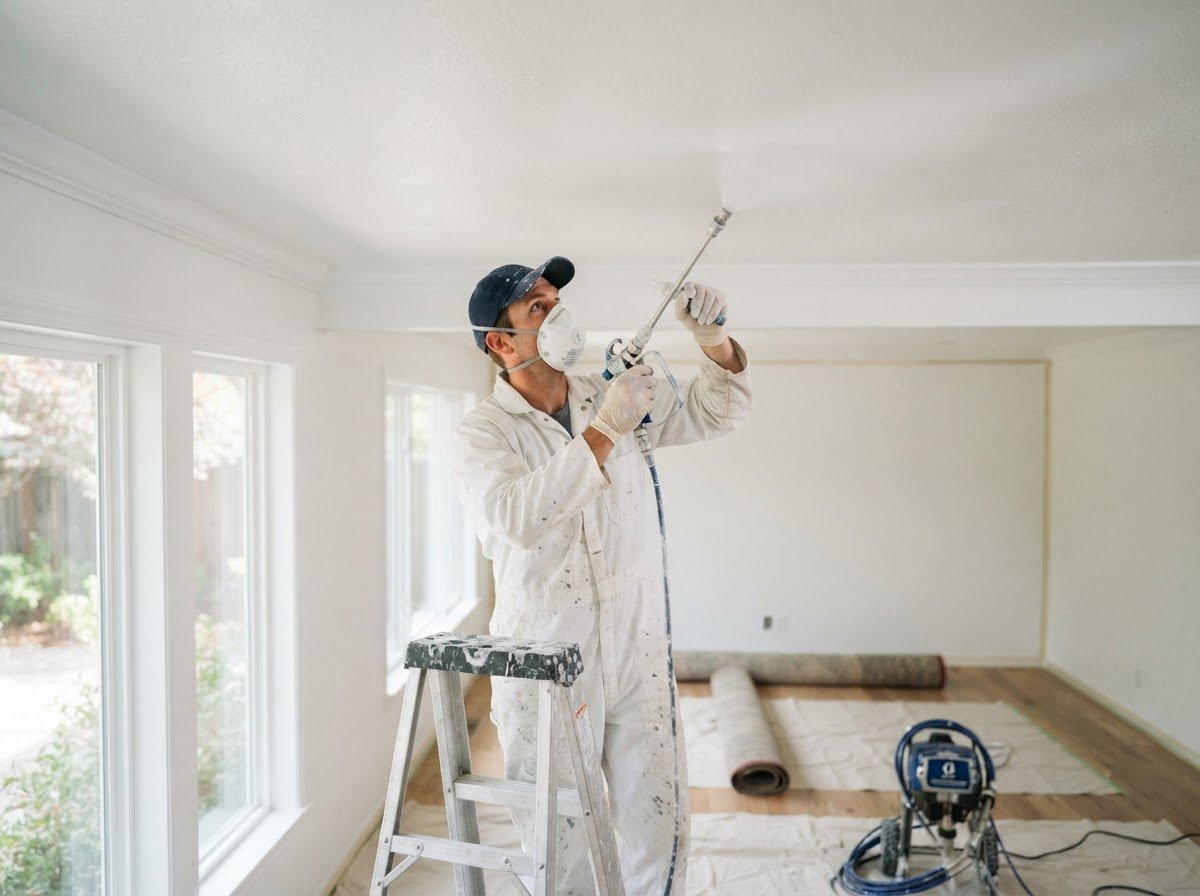
Industrial painting in Mussafah is mostly about surfaces that decorators never see: galvanised cladding, structural steel, rendered block, concrete columns, dock walls and ceilings coated in years of dust. The paint is the cheap part. Whether the finish lasts two years or ten is decided almost entirely by cleaning, repair and priming. Our painting services follow the same discipline that we use for offices and villas, adapted to industrial conditions.
Match the coating to the surface and the exposure
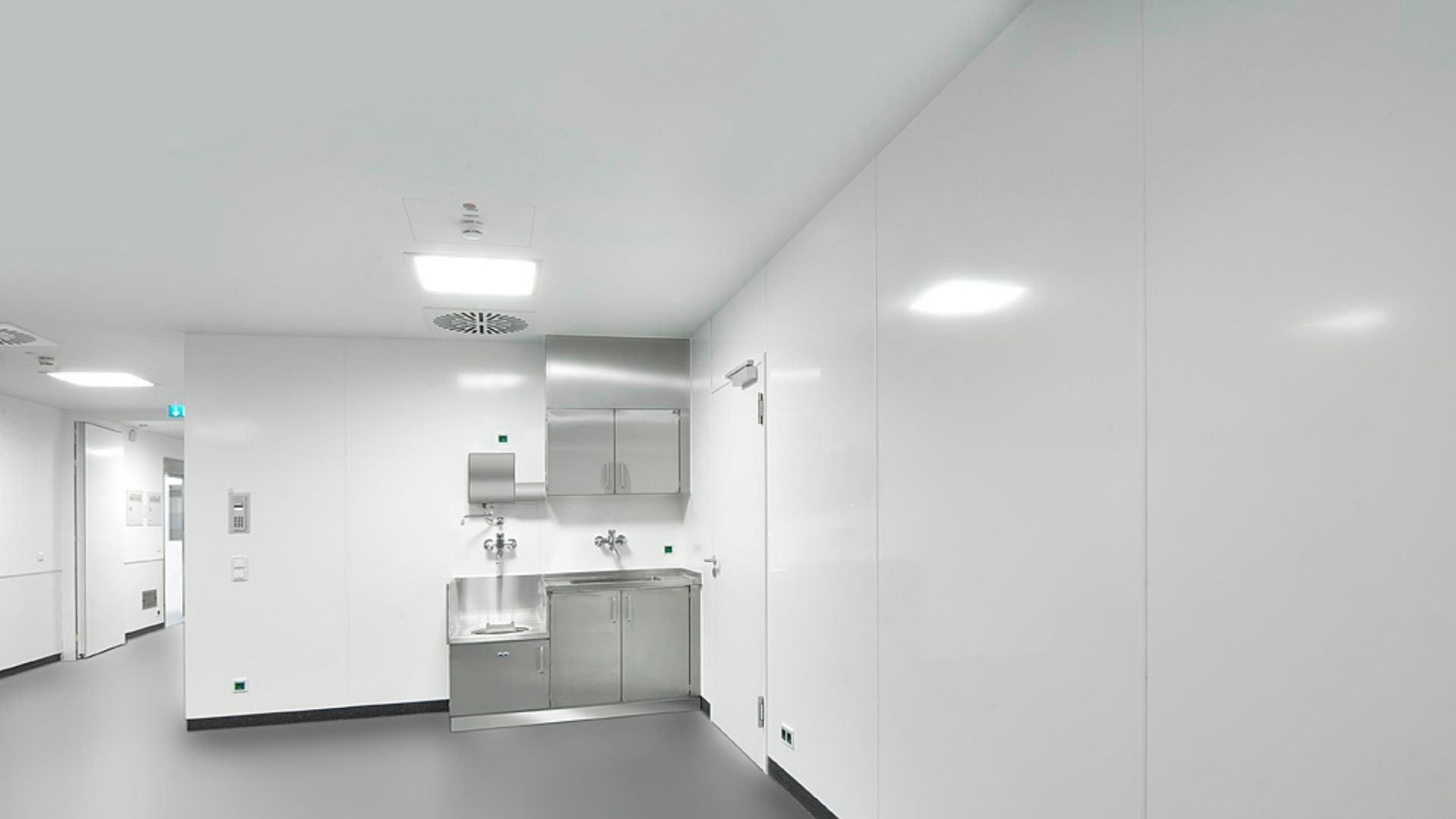
Interior block and plaster walls in dry areas can take a quality acrylic or vinyl emulsion. Washdown areas, food and beverage rooms and workshops need a harder, cleanable system such as epoxy or polyurethane wall coating. Structural steel and external steelwork need a rust-inhibiting primer, correct dry-film build and a weather-resistant topcoat. Galvanised sheeting needs a proper etch or mordant primer before topcoating, or the paint peels in sheets. Concrete floors and columns need cleaning and primer suited to alkaline substrates.
Prepare to a standard, not to a deadline
We remove loose paint and rust, wash off dust, grease and chemical contamination, repair cracks and holes, and prime exposed substrate before any topcoat. Where rust is present on steel, we remove it to a sound surface and treat it rather than painting over it. On ceilings and high steel we work from scaffold towers or powered access platforms, with exclusion zones and spotters where forklifts or foot traffic continue below.
Colour, visibility and safety marking
Light colours on walls and ceilings improve lighting levels and make dust and leaks easier to spot. Safety marking is part of the same job: pedestrian walkways, forklift lanes, loading zones, stop lines, fire equipment locations and hazard areas should be painted or taped in a consistent, durable system and refreshed whenever the floor is recoated.
- Interior and exterior repainting of warehouses, factories and workshops
- Steel protection: rust removal, primer and topcoat for columns, frames and cladding
- Hygienic epoxy and polyurethane wall coatings for clean and wet areas
- Floor line marking, bay numbering, fire equipment and hazard signage zones
Factory Refurbishment in Mussafah Without Stopping Production
Factory refurbishment in Mussafah rarely happens in an empty building. More often a plant needs to upgrade a packing hall, add a hygienic room, rebuild a staff area or replace a failing floor while the rest of the plant keeps running. The challenge is not construction difficulty, it is sequencing: how to hand sections of the building back to production in the right order, with dust, noise, fumes and traffic kept away from sensitive operations.
We plan these projects as phased works. Each phase has a defined boundary, a temporary partition or barrier, a separate access route for our crews and materials, and a hand-back date agreed with the production manager. Noisy and dusty tasks such as grinding, breaking out and shot blasting are scheduled for night shifts, weekends or planned shutdowns wherever the operation requires it. Where the plant handles food, pharmaceutical or electronic products, we align to your hygiene or contamination rules and use low-odour materials and sealed dust control.
A typical factory refurbishment scope combines several of our trades:
- Floor renovation: slab repair, drain and trench reinstatement and a new coating system suited to the process
- Wall and ceiling upgrades: hygienic panels or coatings, gypsum or panel ceilings, sealed light fittings
- Partitions and mezzanine offices: gypsum partitioning, glazed partitions, quality control rooms and supervisor cabins
- Staff and welfare areas: canteens, prayer rooms, changing rooms, washrooms, flooring and joinery
- Exterior works: repainting, cladding repairs, loading-bay concrete and signage areas
Workshop Renovation in Mussafah: Floors, Walls and Mezzanine Offices
Workshop renovation in Mussafah covers a very wide range of premises: vehicle repair garages, fabrication shops, machine workshops, spare-parts stores, and the showroom-plus-workshop units that are common in the district. They share the same problems. Floors are stained with oil, brake fluid and coolant. Walls are scuffed and greasy. Lighting is poor. Offices and customer areas are cramped and tired. Owners also want the premises to look professional to customers and to inspectors.
A well-planned workshop renovation does the following, usually in one phased project:
Floors that resist oil and are easy to clean
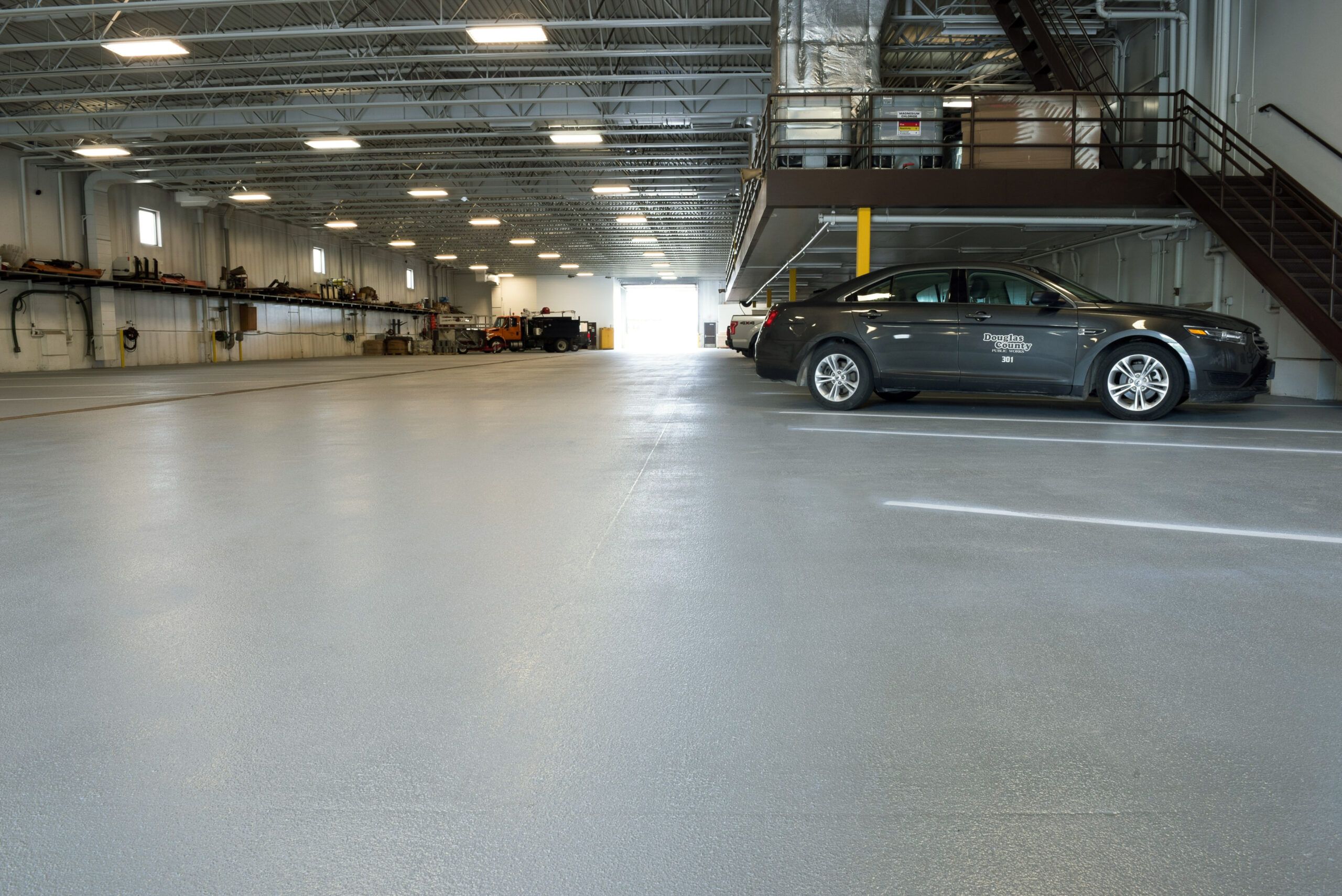
We grind away contaminated surface, treat oil-soaked concrete with appropriate degreasing and, where required, deeper remediation, and then apply an oil-resistant epoxy or polyurethane system. A fine anti-slip texture is specified where floors get wet or oily. Falls and drain areas are corrected so washdown water actually reaches the drain.
Walls and ceilings that can be washed
The lower 1.5 to 2 metres of workshop walls take the most abuse. A hard, washable coating on this zone, with a lighter paint above, gives you a clean look at reasonable cost. Ceilings are cleaned, repaired and repainted in a light colour, which also improves how bright the space feels under the same lighting.
Offices, reception and staff areas
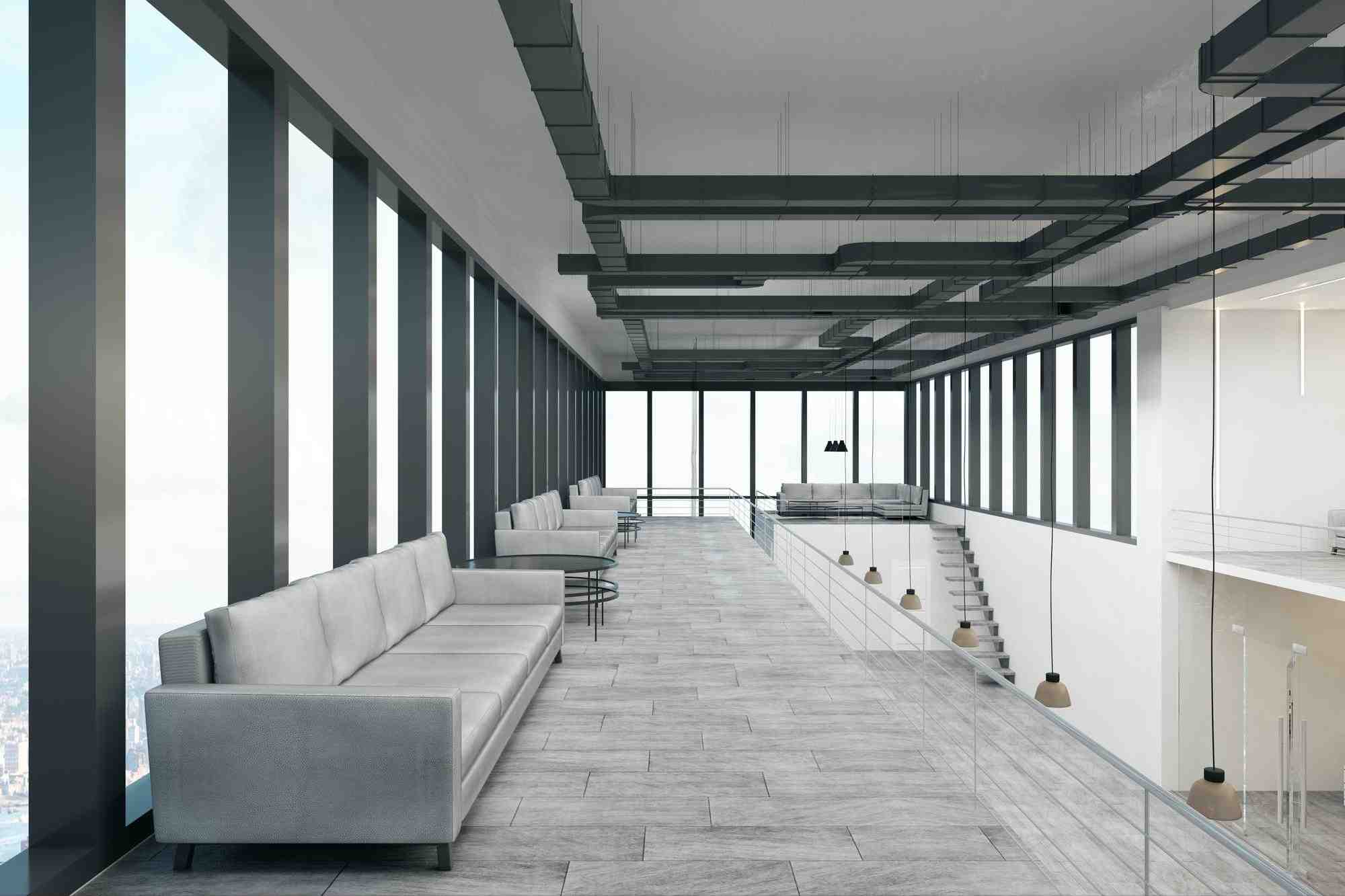
Many workshops need a better customer counter, a small meeting room or a supervisor office. We build these with gypsum or glazed partitions, a suspended ceiling, durable flooring and proper air-conditioning provision, separated from the dust and noise of the workshop floor. Because we also deliver office renovation, the standard of finish in these areas matches a normal commercial office.
Planned Preventive Maintenance for Industrial Buildings in Abu Dhabi
Planned maintenance is the cheapest way to reduce the number of expensive surprises. For an industrial unit it need not be complicated. It is a written list of what to inspect, how often, who does it, and how findings are recorded and fixed. We can produce this after the first site visit and either hand it to your facilities team or deliver it ourselves under a maintenance agreement.
The right frequency depends on the building, but the structure below is a sensible starting point for most Mussafah units. It is a guide, not a substitute for the requirements of your lease, insurer or equipment manufacturers.
| Frequency | Items to check | Typical action |
|---|---|---|
| Monthly | Gutters and roof outlets, loading-bay areas, floor joints and edges, safety marking, door and shutter surrounds, visible leaks and stains | Clear, tighten, patch and record with photographs |
| Quarterly | Wall and ceiling cracks, cladding fixings, sealant lines, external paint condition, drains and trenches, partition damage | Re-seal, repair and touch up before problems spread |
| Twice a year | Full roof and cladding walk-over (before the rainy months), steel corrosion check, floor coating wear and chipping, waterproofing at wet areas | Priority repair list with cost estimate |
| Annually | Full condition survey, repainting plan, floor recoating plan, budget forecast for the next year | Written report and next-year plan |
Working Safely in an Operating Industrial Facility
Contractors working in live industrial buildings add risk to a site that already has forklifts, machinery and hazardous materials. Doing that safely is not paperwork for its own sake. It is what keeps your staff, stock and insurance cover intact. Abu Dhabi has an established occupational safety framework, and many Mussafah operators also follow their own corporate or client safety requirements. We adapt to whichever applies to your site.
Before work starts we agree and document the following with you:
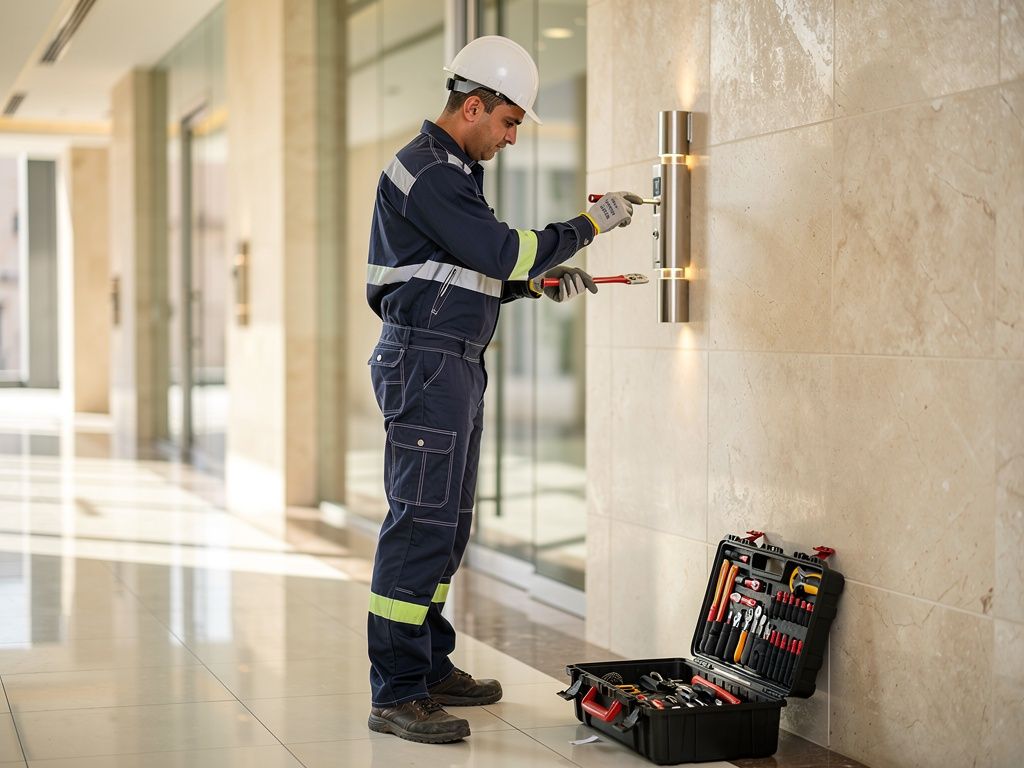
- A method statement and risk assessment for each task, including working at height, grinding, chemical handling and hot works
- A permit-to-work or site induction process where your facility requires one
- Separation of our work zones from forklift routes and pedestrian paths, with barriers, signage and spotters
- Ventilation and fume control when using solvent-based or strongly scented products, with safe re-entry times agreed
- Storage and labelling of coatings, thinners and cleaning agents, and safe handling of waste
- Protection of racking, stock, machinery and electrical equipment with covers and sealed dust control
- Where fire alarms, sprinklers or detectors are affected by ceiling or partition work, coordination with the relevant system owner and Civil Defence requirements
What Affects the Cost and Timeline of Industrial Maintenance Work
Clients often ask for a price per square metre before anyone has seen the building. We do not give blind numbers, because for industrial work a single figure can mislead by a factor of two. What we can do is explain what drives the cost so that you can compare quotations on equal terms.
- Condition of the existing surface. A sound, clean slab needs light preparation. A slab with oil contamination, laitance, old coatings and deep cracking needs far more.
- The system chosen. A thin sealer, a self-levelling epoxy, a quartz-filled mortar and a polyurethane cement are different products with different thickness, material cost and application time.
- Access and working hours. Night and weekend work, restricted areas and phased hand-backs add supervision and sometimes labour cost, but may save more in avoided downtime.
- Height and scaffold requirements. High ceilings and steelwork need towers or powered access, which affects both cost and programme.
- Size and repeatability. Large open floors apply efficiently. Many small zones with complex edges and obstructions take longer per square metre.
- Approvals and lead time. Landlord permissions, permits and material delivery can control the start date as much as the work itself.
- Environmental conditions. Summer heat shortens the working time of resin systems and sometimes shifts application to nights, which affects the programme.
Lease Handover and Make-Good Works for Mussafah Units
Industrial leases in Abu Dhabi commonly require the tenant to return the unit in an agreed condition, often described as the condition it was received in, fair wear and tear excepted. At the end of a tenancy that can mean removing partitions and fit-out, repairing walls and floors, repainting, and clearing signage and fixings. Equally, a new tenant often needs to fit out a bare unit before operations can start.
We help on both sides of that cycle. For handover, we walk the unit against your lease and the landlord's checklist, price the make-good as a clear list, and complete it in time for the inspection. For takeover, we repair and prepare the unit, install partitions, ceilings, flooring and painting, and coordinate your move-in date. In both cases we recommend photographing the unit before any work begins and again at completion, because disputes about condition are far easier to settle with dated evidence.
Please note that responsibilities vary between leases. We never advise on the legal interpretation of a contract, but we are happy to price work against the clauses that you point us to.
How to Choose an Industrial Maintenance Contractor in Mussafah
There is no shortage of contractors in Mussafah. The difference between them is usually visible in the way they quote, how they plan and what they say about risk. Use the following questions to compare any contractor, including us.
- Are they licensed and insured for the work? Ask to see the trade licence and relevant insurance, and confirm that the activities cover what you need.
- Do they visit the site before quoting? A price given over the phone for a floor or roof is a guess.
- Is preparation itemised? If the quotation does not mention grinding, repairs, moisture testing and cleaning, the price probably leaves them out.
- Do they name the product system and thickness? Brand, type, coats and approximate thickness should be stated, with manufacturer data sheets on request.
- Can they work within your operating window? Ask how they phase the job, what they do about dust and fumes, and when each area will be handed back.
- Who supervises on site? Ask for the name of the person responsible and how often they are present.
- What do they hand over? Look for photographs, cure and care instructions, and a clear statement of what is covered after completion.
Linking Maintenance, Refurbishment and Longer-Term Planning
Maintenance and refurbishment are two ends of the same spectrum. A well-maintained building postpones the day when major refurbishment becomes necessary, and when that day does come, a maintenance history tells you precisely which parts of the building have performed well and which have not. If you are weighing whether to keep repairing or to renew, our building refurbishment services page explains how we approach full upgrades, and our building maintenance and repair services overview shows the full range of trades available under one contract.
For businesses that expect to expand, we can also help plan upgrades in stages: floor first, then walls and ceilings, then offices and welfare areas, each one budgeted and scheduled so that the building never has to be closed for long. This approach spreads the cost, keeps the premises presentable to customers and auditors, and avoids the false economy of repairing something that is about to be replaced.
If you are not sure where to begin, a free site visit is the most efficient first step. We will walk the premises with you, note what we see, explain the options in plain language and send a written quotation. There is no obligation, and you are welcome to use our findings to compare other contractors. When you are ready, use the form below or call +971 50 844 4013 to contact FAIRBUILD.
What We Deliver
Industrial Maintenance Services in Mussafah
Warehouse Maintenance
Roof, cladding, wall, ceiling, door-surround and external repairs, with preventive checks before the rainy season.
Epoxy & Industrial Flooring
Slab assessment, preparation, crack and joint repair and the right coating system for your traffic.
Industrial Painting
Steel, cladding, block walls, hygienic coatings and safety marking, with surface preparation done properly.
Factory Refurbishment
Phased upgrades of production, packing, staff and office areas without stopping the line.
Workshop Renovation
Oil-resistant floors, washable walls, mezzanine offices and layout changes for vehicle and fabrication workshops.
Lease Handover Works
Make-good, repainting and reinstatement so units are returned to the landlord in the agreed condition.
Planned Maintenance
Written inspection schedule, photo reports and prioritised repair lists for the whole year.
Safe Working
Method statements, permits, working-at-height controls and waste handled to Abu Dhabi requirements.
How We Work
Our Step-by-Step Process
A transparent, milestone-based workflow, so you always know what happens next, who is on site and what it costs.
Site Visit
We walk the unit with you, note defects, check access and operations, and ask about your lease and shutdown windows.
Written Quotation
An itemised scope with preparation, materials, quantities and a programme that shows how work is phased.
Approvals & Planning
Landlord or authority approvals, permits, method statements and material orders arranged before mobilisation.
Execution
Work is carried out zone by zone with dust control, protection of stock, and a supervisor on site.
Handover & Care
Joint inspection, photographs, cure and care instructions and an optional preventive maintenance schedule.
Systems & Finishes
Industrial Coatings and Finishes We Install


Why FAIRBUILD
Why Property Owners Choose FAIRBUILD
- A licensed Abu Dhabi contractor with an office on Mussafah M9, close to your site
- More than 18 years of renovation, finishing and maintenance experience in the UAE
- Painting, flooring, partitions, ceilings and general repairs by one accountable team
- Itemised written quotations that show preparation separately from materials
- Work phased around your operation, with dust control and protection of stock
- Clear handover: photographs, cure instructions and a maintenance recommendation
Coverage
Industrial Maintenance in Mussafah M9, M10, ICAD and Nearby Areas
Our teams are based in Mussafah and cover every industrial sector as well as the rest of the emirate. If your unit is not listed, call us: we work wherever your building is in Abu Dhabi.
- Mussafah M9
- Mussafah M10
- Mussafah Industrial Area
- ICAD I
- ICAD II
- ICAD III
- Mussafah Shabiya
- Al Mafraq Industrial
- KIZAD
- Abu Dhabi City
- Baniyas
FAQ
Industrial Building Maintenance in Mussafah: Frequently Asked Questions
It covers the repair and upkeep of warehouses, factories and workshops: floor repairs and epoxy flooring, industrial painting, wall and ceiling repairs, partitions and mezzanine offices, roof and cladding sealing, loading-bay repairs, lease handover works and planned preventive maintenance. FAIRBUILD delivers these trades under one contract from our base on Mussafah M9.
Yes. We phase the work zone by zone, separate work areas from forklift and pedestrian routes, and schedule noisy or dusty tasks for nights, weekends or planned shutdowns. Each area is handed back to you on an agreed date, so production or storage can resume in a controlled order.
It depends on traffic, temperature, wetness and budget. Light-traffic stores often suit a thin epoxy sealer, general warehouses and workshops usually suit self-levelling epoxy, heavy forklift areas suit quartz-filled epoxy mortar, and hot-wash or chemical areas suit polyurethane cement. We recommend a system after inspecting the slab and learning how the floor is used.
Most systems allow light foot traffic after roughly a day and heavy wheel loads and chemical exposure after about a week, depending on the product and conditions. Fast-cure systems can return a floor to use in hours where a short shutdown is critical. We agree the cure plan with you in the programme.
We do both. Cracks are routed and filled, damaged joint edges are rebuilt, and holes and trenches are reinstated before any coating goes on. Active movement joints are kept as joints and refilled with a flexible filler, because a rigid coating will simply crack along the same line.
Yes. Our office is on Mussafah M9 and we regularly work in M10, ICAD and neighbouring industrial sectors, as well as across the rest of Abu Dhabi, including KIZAD, Al Mafraq and Baniyas.
Yes. We compare the unit against your lease and the landlord's checklist, price the make-good as an itemised list, and complete repairs, repainting and reinstatement before inspection. For new tenants we also prepare and fit out the unit. We photograph the condition before and after the work.
Yes. After a site visit we can prepare a written preventive maintenance schedule with monthly, quarterly, half-yearly and annual checks. You can run it with your own team or have FAIRBUILD carry it out, with photographs and a prioritised repair list after each visit.
Yes. We visit the property, discuss what you need and provide an itemised written quotation at no charge and with no obligation. Use the quote form on this page, call +971 50 844 4013 or message us on WhatsApp.
Free Site Visit
Request a Free Industrial Maintenance Quote from FAIRBUILD
Tell us about your property and what you would like done. A FAIRBUILD project manager will contact you within 24 hours to arrange a free, no-obligation site visit and send an itemised written quotation.
- Free site assessment and measured quotation
- Itemised scope, materials and programme in writing
- One accountable contractor for every trade